Introduction
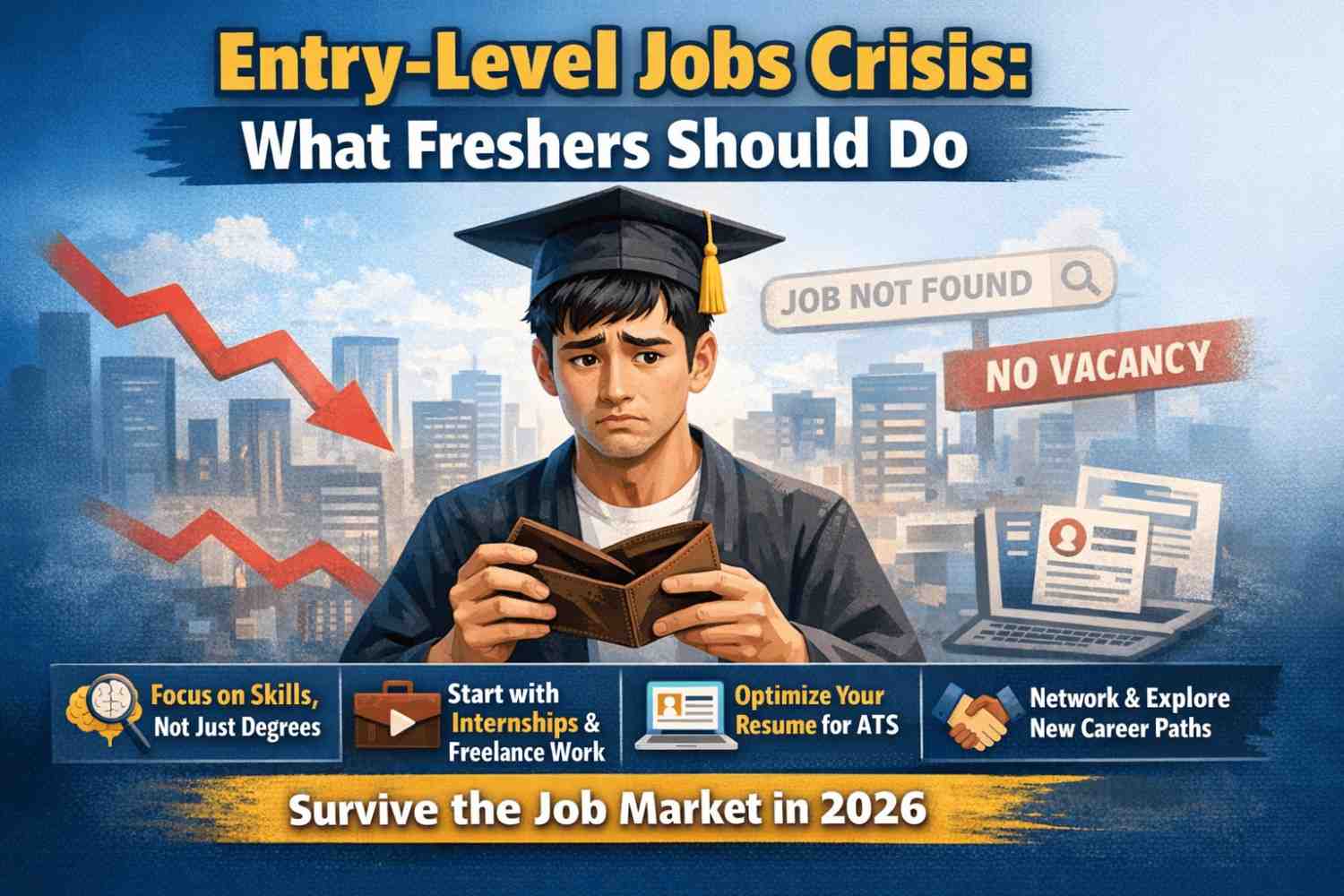
The job market in 2026 is more competitive than ever—especially for fresh graduates. While industries are growing and technology is advancing rapidly, entry-level opportunities are shrinking. Many freshers are finding it difficult to secure their first job despite having degrees, certifications, and even internships.
This growing challenge is often referred to as the “Entry-Level Jobs Crisis.” But why is this happening, and more importantly, what can freshers do to overcome it?
Let’s break it down.
Why Entry-Level Jobs Are Declining
1. Automation & AI Replacing Basic Roles
Companies are increasingly using AI tools and automation to handle repetitive tasks like data entry, customer support, and basic analysis. These were traditionally entry-level roles, but now require fewer human employees.
2. Experience Gap Expectations
Ironically, many “entry-level” jobs now require 1–3 years of experience. Employers prefer candidates who can contribute immediately, reducing training time and cost.
3. Oversupply of Graduates
Every year, millions of students graduate, but job creation hasn’t kept pace. This creates intense competition, especially in fields like IT, management, and commerce.
4. Skills Mismatch
Many freshers lack job-ready skills. While they have degrees, employers are looking for practical abilities like communication, problem-solving, and technical expertise.
What Freshers Should Do to Stand Out
1. Focus on Skills, Not Just Degrees
In 2026, skills matter more than qualifications. Employers are prioritizing what you can do over what you studied.
Learn in-demand skills like:
-
Data analysis
-
Digital marketing
-
AI tools (ChatGPT, automation tools)
-
Programming (Python, JavaScript)
-
Communication & soft skills
Tip: Build a portfolio to showcase your work instead of just listing qualifications.
2. Start with Internships or Freelancing
If full-time jobs are hard to get, start small.
-
Apply for internships (paid or unpaid)
-
Take freelance projects
-
Work on real-world assignments
This helps you gain practical experience, which is what employers value the most.
3. Optimize Your Resume for ATS
Most companies use Applicant Tracking Systems (ATS) to filter resumes.
?? Make sure your resume:
-
Includes relevant keywords from job descriptions
-
Is simple and clean (no fancy designs)
-
Highlights achievements, not just responsibilities
Example:
“Worked on marketing campaigns”
“Improved social media engagement by 40%”
4. Build a Strong Online Presence
Recruiters often check online profiles before hiring.
Focus on:
-
LinkedIn profile optimization
-
Sharing posts about your learning
-
Showcasing projects and achievements
Bonus Tip:
Engage with recruiters and industry professionals regularly.
5. Learn How to Network
Many jobs are filled through referrals, not job portals.
Start networking by:
-
Attending career events
-
Connecting with professionals on LinkedIn
-
Asking for informational interviews
Simple message example:
“Hi, I’m a fresher exploring opportunities in digital marketing. I’d love to learn from your experience.”
6. Be Open to Alternative Career Paths
Don’t limit yourself to traditional job roles.
Explore:
-
Startups (more learning opportunities)
-
Remote jobs
-
Contract roles
-
Gig economy work
These paths can help you gain experience faster than waiting for a “perfect job.”
7. Upskill Continuously
The job market is evolving rapidly, and continuous learning is no longer optional.
Platforms to consider:
-
Coursera
-
Udemy
-
LinkedIn Learning
Focus on short, practical courses that improve employability.
8. Prepare Smartly for Interviews
Getting shortlisted is only half the battle—you need to perform well in interviews.
Key preparation tips:
-
Practice common interview questions
-
Learn how to explain your projects clearly
-
Be confident, not overconfident
Remember:
Employers hire attitude + skills, not just knowledge.
Mindset Shift: From Job Seeker to Problem Solver
One of the biggest changes freshers need to make is in their mindset.
Instead of asking:
“Who will give me a job?”
Start asking:
“What value can I provide to a company?”
Employers are always looking for candidates who can solve problems, improve processes, or bring new ideas.
Industries Still Hiring Freshers in 2026
Despite the crisis, several sectors are still hiring actively:
-
IT & Software Development
-
Digital Marketing
-
E-commerce
-
Healthcare & Allied Services
-
AI & Data Analytics
Tip: Target growing industries instead of saturated ones.
Common Mistakes Freshers Must Avoid
-
Applying blindly without tailoring resumes
-
Relying only on job portals
-
Ignoring skill development
-
Expecting high salaries without experience
-
Giving up too early
Success in today’s job market requires strategy, patience, and persistence.
Conclusion
The entry-level job crisis is real, but it’s not impossible to overcome. The rules of the job market have changed, and freshers need to adapt quickly.
By focusing on skills, gaining practical experience, networking effectively, and maintaining the right mindset, freshers can significantly improve their chances of landing a job.
Remember, your first job may not be perfect—but it’s the first step toward a successful career. |