Introduction
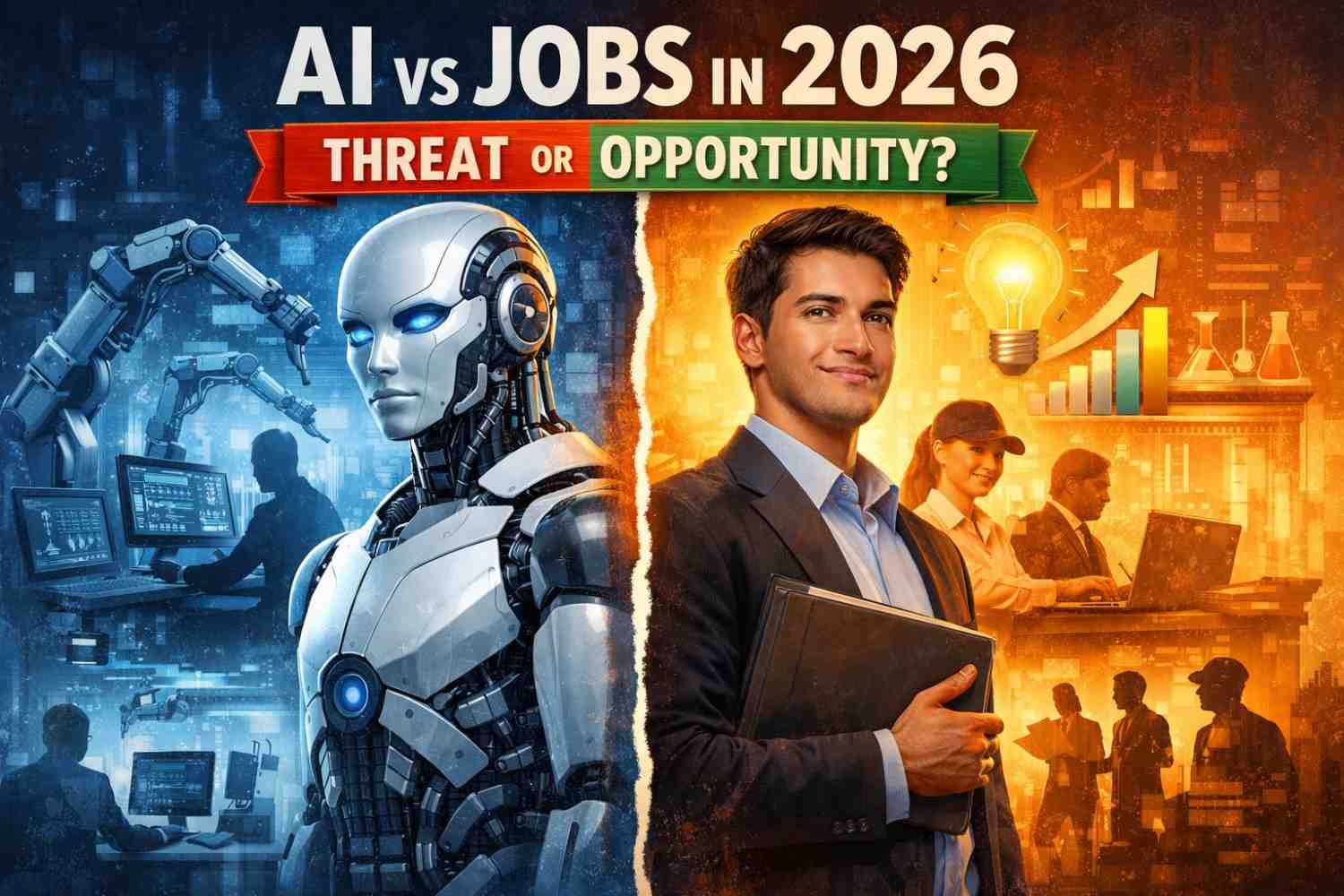
Artificial Intelligence (AI) is no longer a futuristic concept—it is already reshaping the global job market. From automating repetitive tasks to enhancing productivity, AI is transforming how businesses operate and how people work. In 2026, the debate has intensified: Is AI a threat to jobs or an opportunity for growth?
The answer is not as simple as choosing one side. AI is both disrupting traditional roles and creating entirely new career paths. For job seekers and professionals, understanding this shift is crucial to staying relevant in the evolving workforce.
The Rise of AI in the Workplace
Over the past few years, AI has rapidly integrated into industries such as IT, healthcare, finance, marketing, and customer service. Tasks that once required human effort—like data entry, basic coding, customer support, and report generation—are now being handled by intelligent systems.
Companies are leveraging AI to:
-
Reduce operational costs
-
Improve efficiency and accuracy
-
Enhance customer experience
-
Make data-driven decisions
As a result, businesses are becoming leaner, faster, and more competitive. However, this shift has also raised concerns about job displacement.
The Threat: Jobs at Risk
One of the biggest fears surrounding AI is job loss—and not without reason. Certain roles are more vulnerable to automation, especially those involving repetitive and predictable tasks.
Jobs Most at Risk in 2026
-
Data entry operators
-
Customer support executives (basic queries)
-
Telemarketing roles
-
Administrative assistants
-
Basic accounting roles
AI-powered chatbots, automation tools, and machine learning systems can now perform these tasks faster and with fewer errors than humans.
For freshers, this presents a significant challenge. Entry-level jobs, which traditionally served as stepping stones, are shrinking as companies prefer automation or candidates with advanced skills.
The Opportunity: New Jobs Are Emerging
While AI is replacing some jobs, it is also creating new ones—often in areas that didn’t exist a decade ago.
High-Growth Roles in the AI Era
-
AI/ML Engineers
-
Data Analysts & Data Scientists
-
Cybersecurity Specialists
-
AI Product Managers
-
Prompt Engineers
-
Automation Specialists
In addition, traditional roles are evolving. For example:
-
Marketers now use AI tools for campaign optimization
-
HR professionals use AI for recruitment screening
-
Designers leverage AI for faster creativity
AI is not just eliminating jobs—it is changing the nature of work.
Skill Shift: The New Currency of Employment
In 2026, skills matter more than degrees. Employers are increasingly looking for candidates who can work alongside AI rather than compete with it.
Top Skills to Stay Relevant
-
AI and automation tools (like ChatGPT, data tools)
-
Data literacy and analytical thinking
-
Problem-solving and critical thinking
-
Communication and creativity
-
Adaptability and continuous learning
The demand is shifting from “what you know” to “how well you can apply technology.”
AI + Human Collaboration: The Future of Work
The most successful professionals in 2026 are those who collaborate with AI instead of fearing it.
Think of AI as:
-
A co-worker that handles repetitive tasks
-
A tool that boosts productivity
-
A system that enhances decision-making
For example:
-
A content writer uses AI for drafts but adds creativity
-
A developer uses AI to speed up coding but ensures quality
-
A recruiter uses AI for screening but makes final decisions
This hybrid model—human intelligence + artificial intelligence—is becoming the new standard.
Impact on Salaries and Career Growth
AI is also influencing salary structures and career trajectories.
What’s Changing?
-
High-skilled roles (AI, data, cybersecurity) are seeing salary growth
-
Low-skilled, repetitive roles are facing salary pressure
-
Mid-level professionals need to upskill to stay competitive
Professionals who adapt quickly are experiencing faster career growth, while those resisting change risk stagnation.
Challenges for Freshers and Job Seekers
Fresh graduates are among the most affected by the AI shift.
Key Challenges:
-
Fewer entry-level job opportunities
-
Higher skill expectations from employers
-
Increased competition
However, this also presents an opportunity to start strong by learning in-demand skills early.
What Freshers Should Do:
-
Learn AI tools and basic automation
-
Build practical projects
-
Focus on internships and real-world experience
-
Stay updated with industry trends
Industries Benefiting the Most from AI
Not all industries are equally affected. Some sectors are experiencing massive growth due to AI adoption.
Top Growing Sectors in 2026
-
Information Technology
-
Healthcare (AI diagnostics, telemedicine)
-
FinTech (fraud detection, automation)
-
E-commerce and logistics
-
EdTech
These industries are not just surviving—they are thriving because of AI.
Is AI Really a Threat?
AI becomes a threat only when individuals fail to adapt. History shows that technological advancements always disrupt jobs initially but eventually create more opportunities.
From the Industrial Revolution to the rise of computers, every transformation has followed the same pattern:
-
Job disruption
-
Skill evolution
-
New job creation
AI is no different—it’s just happening faster.
Conclusion: Threat or Opportunity?
So, is AI a threat or an opportunity in 2026?
?? The answer depends on you.
-
If you resist change → AI is a threat
-
If you adapt and upskill → AI is a massive opportunity
The future belongs to those who are willing to learn, evolve, and embrace technology. Instead of asking whether AI will take your job, the better question is:
“How can I use AI to grow my career?”
Final Takeaway
AI is not replacing humans—it is replacing outdated ways of working.
To stay ahead in 2026:
-
Learn continuously
-
Embrace AI tools
-
Focus on skills, not just degrees
-
Be adaptable
The job market is changing, but opportunities are bigger than ever for those who are ready. |